
 (719) 922-0428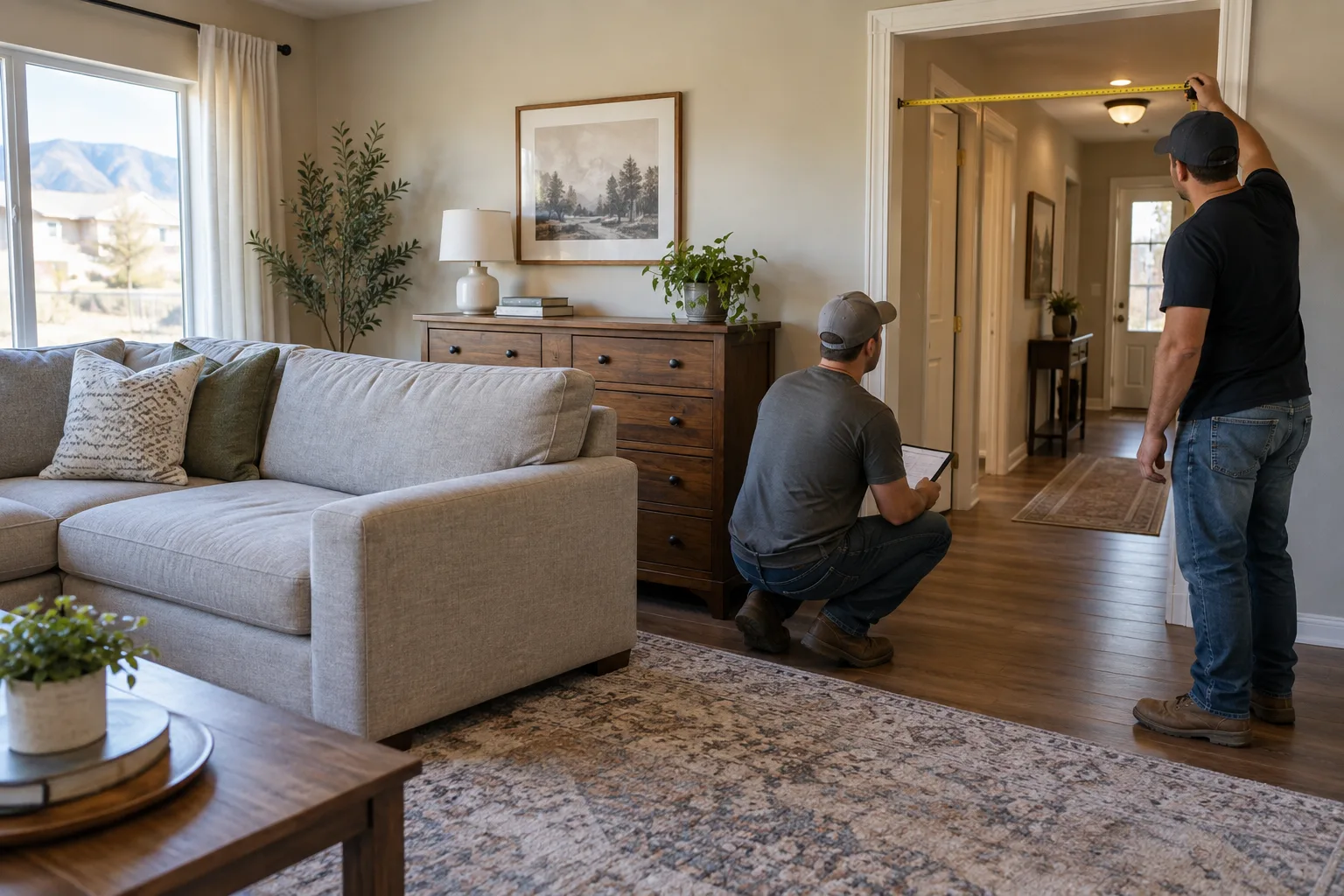
You do not need to drag a couch to the curb to prepare for a removal visit. The most useful work happens before anyone picks it up: decide exactly what goes, check that it can travel through the planned route, and remove the small obstacles that turn a heavy carry into a risky one.
Measure the piece and the exit path
Record the furniture’s widest, tallest, and deepest points. Then measure the narrowest doorway, stair turn, hallway, gate, or elevator opening along the route. Include protruding arms, feet, handles, and trim. A flexible tape can follow awkward shapes, but write down the largest real dimension rather than the neatest one.
Tell the team if the piece entered the room before a railing, door, or built-in was installed. That history can explain why a normal-looking exit is no longer possible. Do not begin structural disassembly on your own. The crew can explain whether removable legs, cushions, or a planned dismantling step belong in the scope.
The five-minute access check
- Furniture dimensions and approximate weight, if known
- Door, hall, stair, and gate measurements
- Number of stairs and any sharp turns or low ceilings
- Distance from the item to legal truck parking
- Loose rugs, cords, lamps, frames, or breakables in the route
Separate keep items from remove items
A cleanout can put several similar boxes, chairs, or side tables in the same room. Use painter’s tape or a paper label to mark the pieces that stay. Keep keys, remotes, hardware, documents, and small valuables away from the removal zone. If a dresser contains anything, empty it unless the team has told you otherwise.
Walk through the list once with the crew before loading begins. If family members or a property representative will make final decisions, agree on the list before the appointment. A clear scope protects both the household and the team.
Do not turn preparation into a risky solo move
Large furniture is difficult because of bulk, poor handholds, shifting weight, and limited visibility, not only pounds. OSHA guidance for manual material handling says workers should get help when a load is too bulky to grasp, blocks their view, or cannot be handled safely. It also recommends mechanical help and team lifts for heavy loads. That workplace guidance is a useful warning at home: good intentions do not make an awkward sectional safe to carry downstairs alone.
Clear the route and leave the heavy carry to people with the right number of hands and appropriate equipment. Keep children, pets, and onlookers outside the working path. If a floor, step, or handrail is damaged, tell the team before anyone starts.
Check donation acceptance before promising the item
Condition matters. Pikes Peak Habitat for Humanity’s current ReStore guidance says accepted furniture must be in good condition and can still be declined based on store needs or safe handling. Its listed exclusions include mattresses, box springs, sleeper sofas, incomplete pieces, and furniture with damage, odor, pet fur, or rips. Check the current rules before assuming a piece will be donated.
A hauling company may sort or route reusable items, but the receiving organization makes the final acceptance decision. Ask what happens if a donation site declines the piece and whether that changes the estimate.
What to say on the call
Give the team the piece count, the largest dimensions, the room and floor, stair information, truck access, and any damage or unusual material. Send photos when requested. You can review the furniture removal service summary or use the direct contact details when you are ready.
Sources checked
- OSHA, Materials Handling: Heavy Lifting, accessed September 17, 2026. General safe-lifting guidance.
- Pikes Peak Habitat for Humanity ReStore donation guidelines, accessed September 17, 2026. Colorado Springs-area furniture acceptance.
Next useful guide
Clearing more than one room? Use the four-zone cleanout plan before you start making piles.