
 (719) 922-0428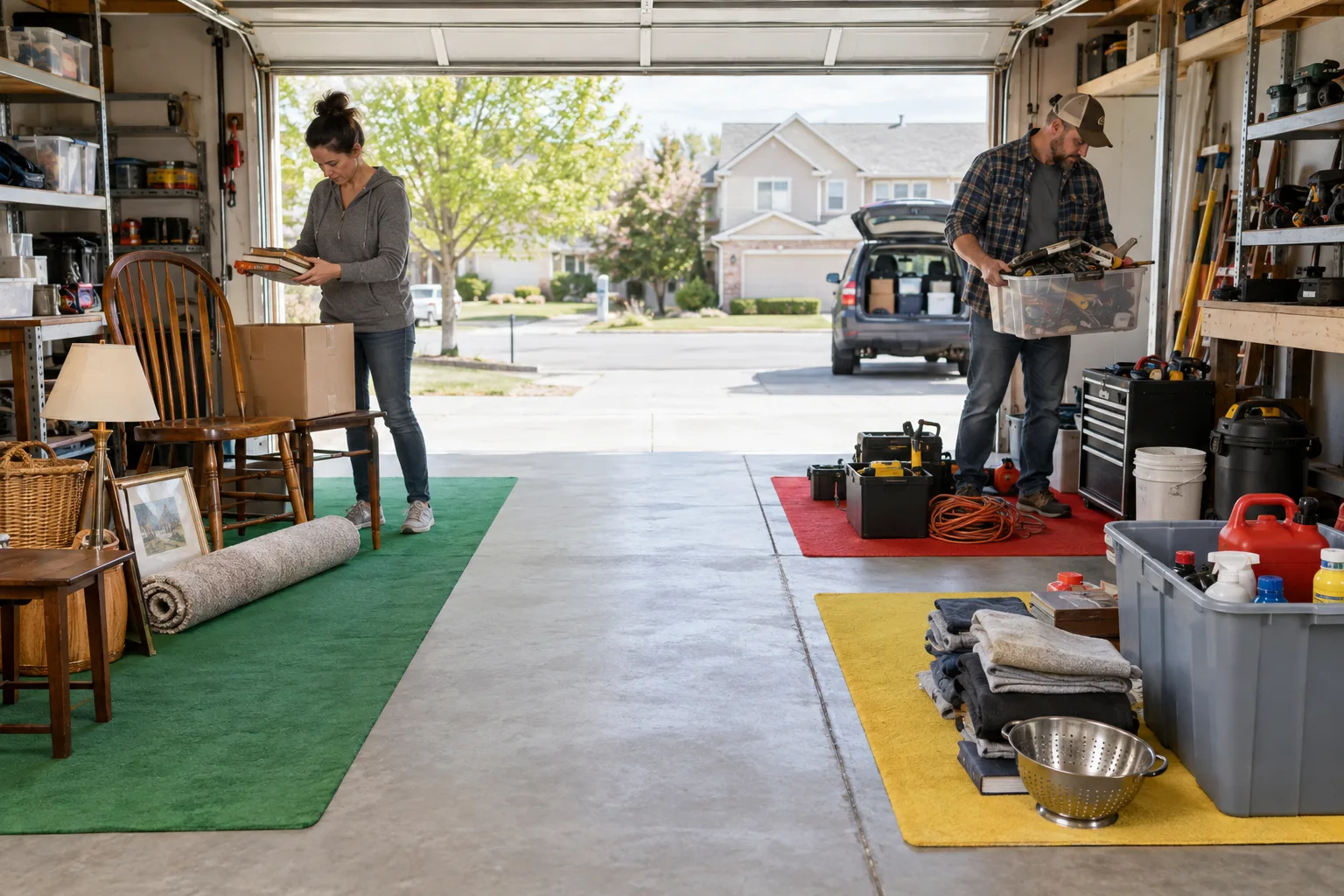
A garage cleanout stalls when every item moves from one temporary pile to another. Give each item a destination the first time you handle it. The four-zone method works because it separates a decision from the physical hauling job.
Set up four clearly marked zones
| Zone | What belongs there | Next action |
|---|---|---|
| Keep | Items with a real use and a named storage location | Clean and return them only after the floor and shelves are ready |
| Reuse | Working, clean items that fit a current donation or resale rule | Confirm acceptance and a deadline |
| Haul | Approved bulky items, broken furniture, bagged dry clutter, and ordinary household junk | Group by the loading route, not by emotional category |
| Special disposal | Paint, chemicals, fuels, batteries, propane, fluorescent lights, electronics, and unknown products | Keep containers stable and check the county program |
Use large paper signs. Do not rely on memory once several people start sorting. Keep the haul and special-disposal zones separate so no one loads an unsafe item by mistake.
Find special-disposal items before the boxes
Garages often hold old paint, cleaners, pool products, automotive fluids, pesticides, batteries, aerosols, propane cylinders, and fuel. El Paso County’s 2026 household hazardous-waste guidance accepts many household-generated materials under specific limits and preparation rules. The page says to keep products in original containers, keep them upright and secure, and never mix products. It also lists items the facility does not accept.
Do not open an unknown container to identify it by smell. Do not combine partial containers. If something is leaking, corroded, swollen, unlabeled, or unstable, call the county program for instructions before moving it.
A room-by-room sequence for the garage
- Photograph the starting condition and note blocked exits or utilities.
- Mark the four destination zones outside the main work lane.
- Isolate hazardous and data-bearing items without mixing them.
- Clear a path from the deepest work area to the loading point.
- Work one shelf, wall, or floor square at a time.
- Stop making a reuse pile when no destination or deadline exists.
- Walk the final haul list with the crew before loading.
Put a deadline on the reuse pile
“Donate” is not a destination until an organization has confirmed the item. Check condition rules and capacity while you sort. Pikes Peak Habitat for Humanity, for example, publishes detailed categories and can still decline items based on condition, safety, and current need. Tools must be drained of oil or gas under its current guidance, and chemical-contaminated metal is not accepted for recycling.
Choose a deadline that fits the cleanout schedule. If the item is not accepted or claimed by then, move it to the correct confirmed route. This keeps one hopeful pile from occupying the garage for another season.
Keep the loading path separate from the sorting area
A path should be wide enough for the largest approved item and should not cross open containers, loose hardware, extension cords, wet floors, or unstable stacks. Protect low fixtures and parked vehicles. Tell the hauling team about steep driveways, alley access, snow or ice, gate widths, and parking restrictions.
OSHA’s material-handling guidance warns against lifting loads that are too bulky to grasp or see around. At home, that means you should not use the cleanout as a reason to test whether you can carry a cabinet, workbench, or stacked bin alone. Clear access and let the right number of people handle the move.
Build the estimate list from the haul zone
Once the zones are stable, count or photograph the haul items by type. Note dense material, sharp edges, damaged pieces, stairs, and the distance to parking. Review the household cleanout service summary and use the direct phone or email details when the list is ready.
Sources checked
- El Paso County Household Hazardous Waste, accessed September 17, 2026. El Paso/Teller household eligibility, material examples, limits, packaging, and exclusions.
- Pikes Peak Habitat ReStore donation guidelines, accessed September 17, 2026. Current donation and recycling condition rules.
- OSHA, Materials Handling and Storage, accessed September 17, 2026. General warnings for bulky and heavy loads.
Next useful guide
Found a drawer of old devices? Follow the electronics privacy and disposal checklist before they leave your control.